
Project Overview
Based on the findings of the Los Angeles 100% Renewable Energy Study (LA100) and LADWP's Power Strategic Long-Term Resource Plan (SLTRP), the Proposed Project has been identified as an integral component of implementing a carbon-free energy system that provides reliable and sustainable electrical power for the City of Los Angeles (City). The Proposed Project is necessary for the continued availability of local energy generation that can be dependably and rapidly dispatched to respond to demand for energy in LADWP’s service area required to maintain the resilience and reliability of the City’s electrical power grid. LADWP’s Scattergood Generating Station has been identified as the most immediate and instrumental location in relation to the requirement for firm (i.e., dependable) in-basin generation capacity due to the projected demand for energy in areas of the City that Scattergood serves.
Project Description
LADWP proposes to construct and operate a rapid-response combined-cycle generation system (CCGS) at Scattergood Generating Station. The Proposed Project would replace the generation capacity of existing Scattergood Units 1 and 2, which are conventional natural-gas-fired steam-boiler generators that would be removed from service, with a CCGS capable of operating on a fuel mixture of natural gas and a minimum of 30 percent hydrogen by volume. The proposed CCGS would consist of a combustion-turbine generator and a steam-turbine generator operating in tandem. Additional facilities or ancillary functions required to support the proposed CCGS include, but are not limited to, an air-cooled condenser, wet-surface air cooler, gas compressors, switchyard upgrades, and a dedicated pipeline for industrial wastewater discharge.
With the implementation of expanded renewable generation resources, improvements to transmission systems, increased energy storage, and other elements of the LADWP carbon-free energy system outlined in the SLTRP, LADWP’s in-basin generation units, including the Proposed Project, are anticipated to be utilized less frequently than under current conditions, primarily to meet peaks in the requirement for electrical power during high demand days that exceed renewable energy production and energy storage capacity. In addition, the CCGS would be used during relatively short-term periods when the renewable generation sources and/or transmission assets become unavailable due to emergency circumstances. Therefore, although anticipated to be operated less frequently, this firm local generation capability is crucial to maintaining the resilience and reliability of the LADWP power system.
The necessary infrastructure for the production, delivery, and storage of green hydrogen needed to support the Proposed Project currently does not exist. While it is anticipated that a sufficient market supply of green hydrogen may be available to support the Proposed Project dual-fuel CCGS when it is fully commissioned by the end of 2029, the details of the green hydrogen system are currently unknown. Therefore, this DEIR does not address the supply of green hydrogen to Scattergood Generating Station, which will be analyzed in a separate environmental review and approval process when the necessary information to support an adequate analysis of potential impacts is available. LADWP would not implement or operate this hydrogen infrastructure but would be a purchaser of hydrogen to supply the Proposed Project. Nonetheless, because the combustion-turbine generator component of the proposed CCGS would be capable of operating on a mixture of natural gas and hydrogen fuel, the impacts related to the combustion of such a fuel mixture are analyzed in this DEIR.
Project Schedule
Construction of the proposed project is anticipated to begin in early 2026 and continue through late-2029.
Environmental Review Process
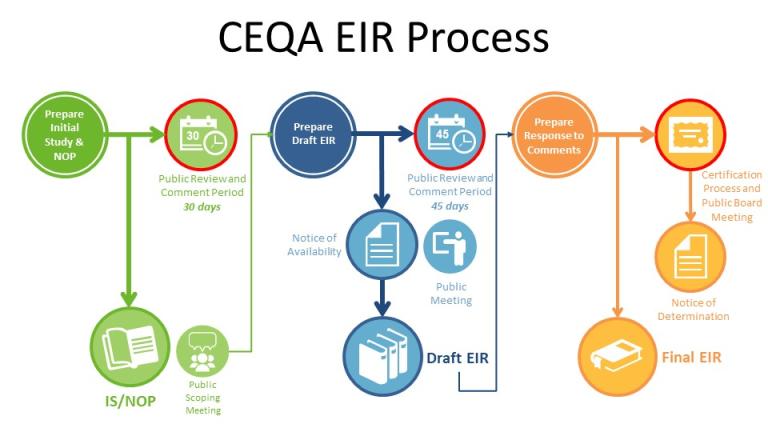
Under the California Environmental Quality Act (CEQA), state and local government agencies are required to inform other agencies and members of the public about the potential environmental impacts of a proposed project, and to reduce or mitigate those impacts to the extent feasible. As the lead agency, LADWP prepared a Draft Environmental Impact Report (EIR) to evaluate the potential environmental impacts of the proposed project.
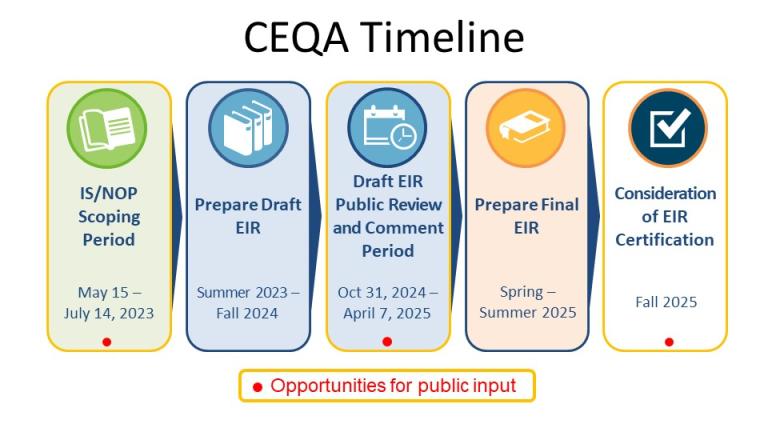
LADWP has prepared a Final EIR for the proposed project, which includes responses to comments received during the Draft EIR public review and comment period. The Final EIR can be accessed in Environmental Reports.
Board Meeting
LADWP will use the Final EIR, inclusive of comments received during the public review period, when considering the project for approval. Consideration of the project for approval and certification of the EIR are scheduled to take place during the Board of Water and Power Commissioners meeting on Tuesday, October 28, 2025 at 10:00 a.m. in the LADWP Board Room at 111 North Hope Street, 15th Floor, Los Angeles, CA 90012. The agenda will be posted at least 72 hours prior to the meeting on the LADWP website at https://www.ladwpcommission.com. Board meetings can be attended by the public in person or via the teleconferencing platform. The eComment period opens at 10:00 a.m. on the Saturday before the scheduled Board meeting, and will close on the Monday before the meeting at 6:00 p.m.
For questions about the project or the meeting, please email: [email protected].
Alternatives Study
In response to the Los Angeles City Council Motion 23-0039, the National Renewable Energy Laboratory has prepared a study to compare the proposed project to non-combustion alternatives including fuel cells, energy storage, demand response, and new transmission.