
Newsletter Article
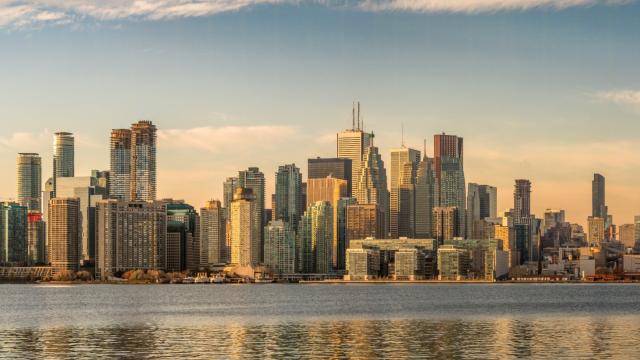
Commercial buildings are the second largest consumer of water in the United States, according to the U.S. Environmental Protection Agency (EPA), accounting for 17% of public water supply withdrawals. Fresh water is expensive and a precious resource, so conserving it is good for the bottom line and the environment.
There are a wide variety of building types, each with its own water use patterns. So, which types use the most? After all, measuring and comparing building water consumption is the first step in making more informed decisions about better water management.
Measuring building water use
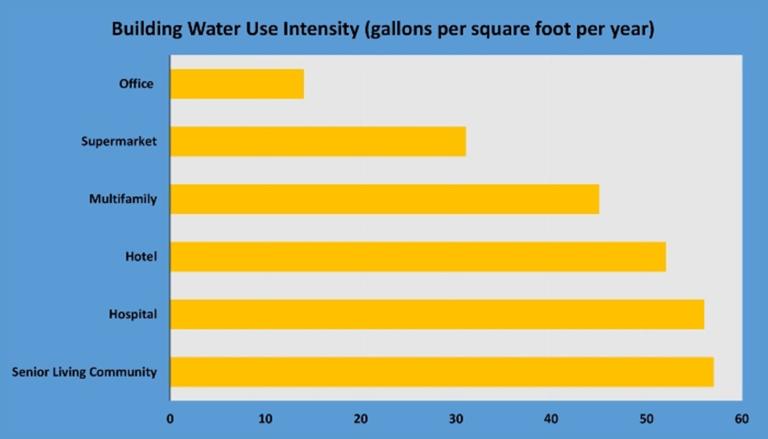
The EPA's ENERGY STAR Portfolio Manager® benchmarking tool tracks water consumption using water use intensity (WUI) in gallons per square foot per year. More than 465,000 buildings have been benchmarked using Portfolio Manager.
According to aggregate data from Portfolio Manager, facilities with long operating hours tend to be the biggest water users. These include senior living communities (57 gal/ft2) and hospitals (56 gal/ft2). Multifamily properties and supermarkets also use a lot of water. By contrast, a typical office building uses only 14 gal/ft2 .
Developing a water management plan
Successful water management requires planning. To achieve your water-saving goals, appoint an interdepartmental water management team. The team will take the lead in evaluating facility water use, implementing water-saving measures, tracking progress and identifying new savings opportunities.
Water management planning typically focuses on water usage in four areas:
- Reducing water losses, such as leaks
- Increasing the water efficiency of equipment and processes
- Encouraging water-saving behavior among employees and building occupants
- Finding ways to recover and reuse water onsite
Start with a facility water assessment. It will help you understand how much water your facility uses and what equipment and processes consume the most water. Use Portfolio Manager to benchmark your water usage against similar facilities.
Implementing water-saving measures
Although every facility is different, the following are commonly used measures to reduce water waste and save money.
- Check for and repair leaks in all water-using equipment, fixtures and pipes. (Learn more)
- Install water-efficient toilets and faucets and waterless urinals in all restrooms. (Check for available LADWP rebates)
- Use water-efficient irrigation practices, such as native landscaping, seasonal scheduling and weather-based irrigation controls. (See enhanced Commercial/Multi-Family Turf Removal Incentives)
- Implement water reuse systems, such as treated greywater or stormwater runoff for irrigation. (Learn more)
Preventive maintenance is critical. Regularly inspect all mechanical systems and water-using equipment and appliances and repair or replace as needed. Order Free Water Conservation Items from LADWP and implement savings across your facility. Make superior water performance routine in your organization.
March 2026 Empowering Small Business
LADWP's monthly Empowering Small Business Newsletter helps inform industry-specific small business customers about LADWP news, conservation programs and ways to save on their bill.
Full Newsletter